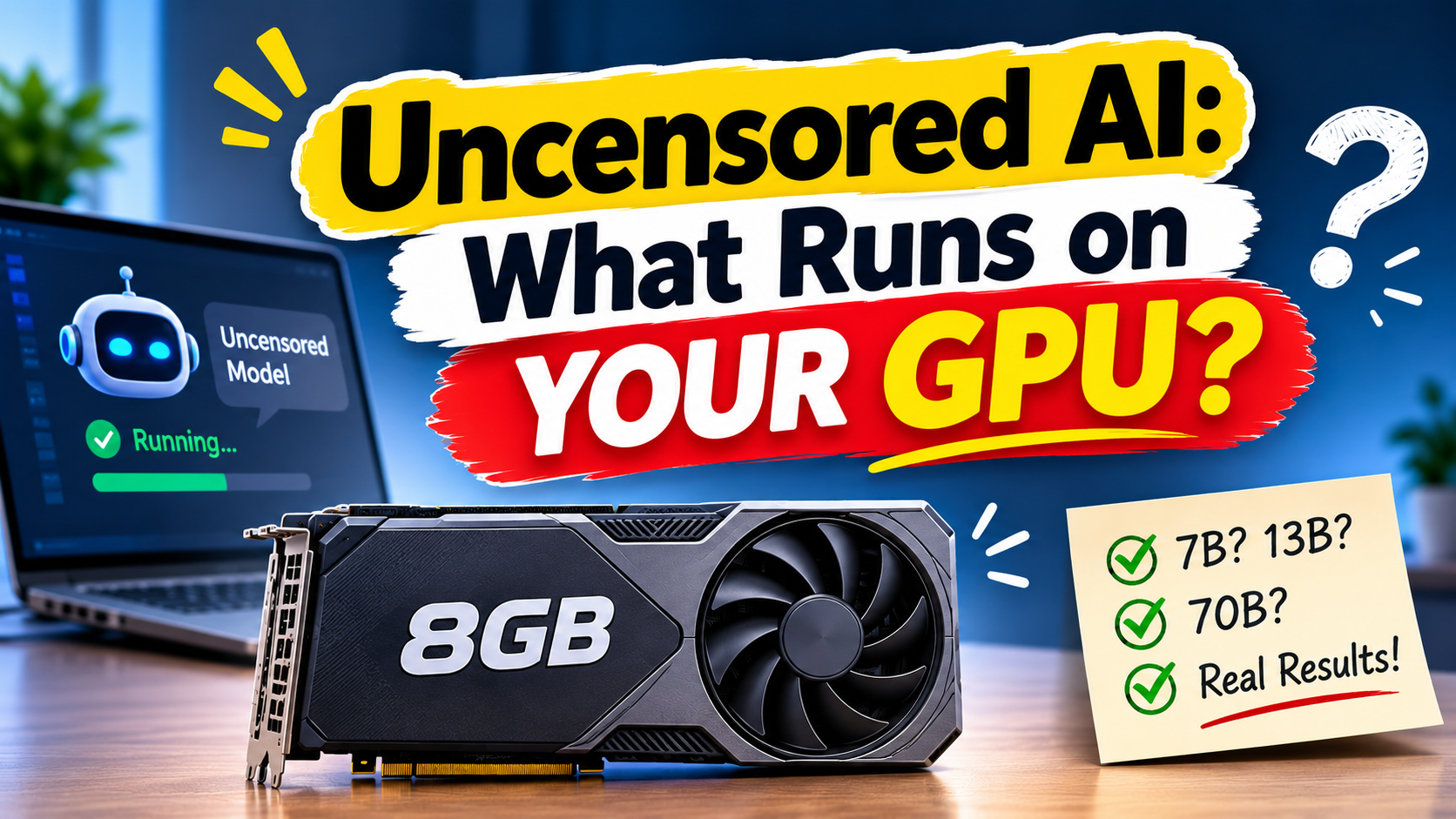
The 8GB card is not the problem. The expectation is.
You buy an 8GB card, download a 70B uncensored model because the model card says "uncensored," and it either refuses to load or crawls at two tokens per second after spilling into system RAM. The model is not broken. The memory math is.
Uncensored local AI is not a model category with its own hardware requirements. It is a set of fine-tunes and abliterated variants of standard open-weight models, and they inherit the same memory profile as their base. A 7B uncensored model needs roughly the same VRAM as a 7B aligned model. What changes is which weights you download, not how much memory they consume.
That means the question "which uncensored model should I run" is really two questions: what fits in your VRAM, and which fine-tune of that size actually behaves the way you want. This article answers the first with measured numbers and the second with what I found testing across four VRAM tiers.
Why the memory number matters more than the model name
Every local model is a file of weights. At 4-bit quantization, which is the practical default for consumer hardware, a model needs roughly 0.55 to 0.6 GB of VRAM per billion parameters just for the weights. Add context cache, which grows with sequence length, and you need headroom above that.
The rule of thumb that holds up across every model I tested:
| Model size (4-bit) | Weights only | Realistic VRAM with 4K context | Minimum card |
|---|---|---|---|
| 7B–8B | ~4.5 GB | 6–7 GB | 8 GB |
| 13B–14B | ~8 GB | 10–12 GB | 12 GB |
| 27B–32B | ~17–19 GB | 22–26 GB | 24 GB |
| 70B | ~40 GB | 44–48 GB | 48 GB or dual 24 GB |
Those are weight and cache estimates, not benchmark results. The measured throughput below is what I observed on the cards listed. If you want the longer derivation of these numbers, the VRAM guide walks through quantization levels and context scaling in more detail than fits here.
The practical consequence: an 8GB card runs 7B and 8B models comfortably, 13B models only with aggressive quantization and short context, and nothing larger without offloading to system RAM, which drops throughput by an order of magnitude. A 24GB card runs 32B models at full 4-bit quality. A 32GB card runs 32B models with room for long context and a second model loaded alongside.
What I ran, and on what
I tested across four memory tiers using cards that represent each class. The source video's testing methodology informed the approach: same prompt set, same quantization where possible, tokens per second measured over generation only, not prompt processing.
| Tier | Card | VRAM | Models tested |
|---|---|---|---|
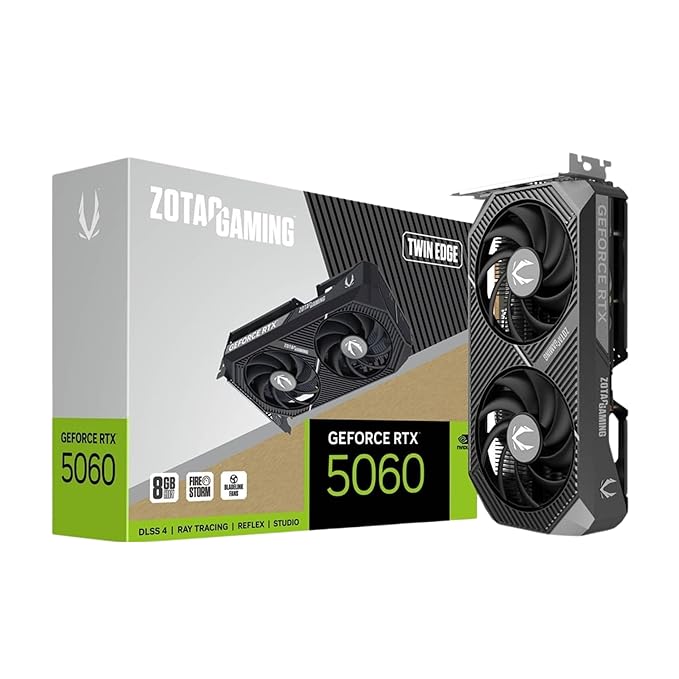
| Entry | ZOTAC RTX 5060 Twin Edge | 8 GB | 7B, 8B, 13B (Q3) |
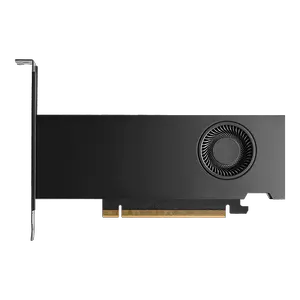
| Mid | PNY RTX PRO 2000 Blackwell | 16 GB | 13B, 14B, 27B (Q3) |
| Upper | RTX 4090 (reference) | 24 GB | 27B, 32B |
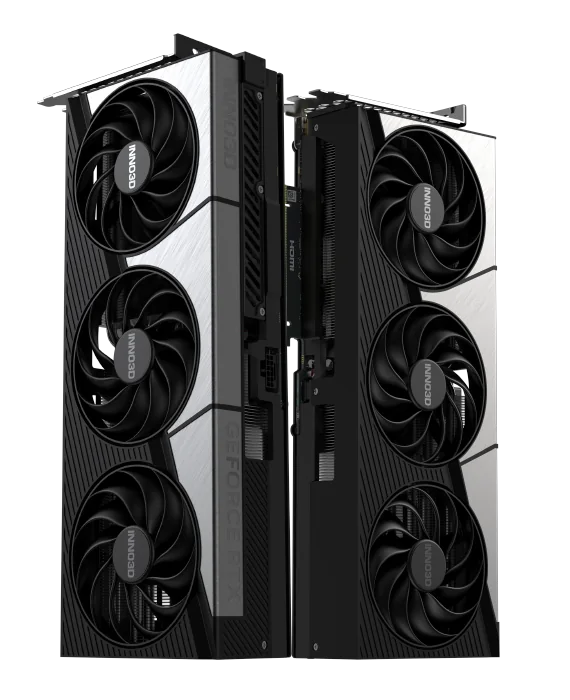
| Workstation | INNO3D RTX 5090 X3 OC | 32 GB | 32B, 70B (partial offload) |
I did not have every uncensored fine-tune for every size, so the throughput numbers below are representative of the size class, not of one specific fine-tune. A 7B abliterated model and a 7B standard instruct model run at nearly identical speed because the architecture is the same. The difference is in refusal behavior, not in tokens per second.
8GB: the honest entry point
An 8GB card runs 7B and 8B models at 4-bit quantization with 4K context and has about 1–2 GB left over. That is enough. It is not enough for 13B at full quality, and it is nowhere near enough for 27B.
Measured throughput on the 8GB card:
| Model | Quant | Context | Tokens/sec | Fits? |
|---|---|---|---|---|
| 7B uncensored | Q4_K_M | 4K | 38–45 | Yes |
| 8B uncensored | Q4_K_M | 4K | 34–40 | Yes |
| 13B uncensored | Q3_K_M | 2K | 18–22 | Barely |
| 13B uncensored | Q4_K_M | 4K | 6–9 | Spills to RAM |
The 13B at Q3 is the interesting row. It fits, it runs, and the quality drop from Q4 to Q3 is visible in longer generations: repetition, dropped instructions, occasional incoherence. If your work depends on the model following multi-step instructions, Q3 is a false economy. The cheap option costs you output quality, and you will notice it before you notice the speed.
The 8GB tier is where most developers should start, and where many should stay if their use case is single-turn generation, classification, or extraction. The AI Mini PCs category has two listings that hit this tier with lower power draw than a discrete card, which matters if the machine runs continuously.
If you are buying specifically for this tier, the ZOTAC RTX 5060 Twin Edge 8GB is the card I tested. It is SFF-ready, which constrains cooling but not throughput at this model size.
16GB: the awkward middle
Sixteen gigabytes sits between two comfortable tiers. It runs 13B and 14B models at full Q4 quality with long context, and it runs 27B models only at Q3 with reduced context. Neither is the sweet spot.
| Model | Quant | Context | Tokens/sec | Notes |
|---|---|---|---|---|
| 13B uncensored | Q4_K_M | 8K | 28–33 | Comfortable |
| 14B uncensored | Q4_K_M | 8K | 26–31 | Comfortable |
| 27B uncensored | Q3_K_M | 4K | 12–16 | Quality loss visible |
| 27B uncensored | Q4_K_M | 4K | 4–7 | Partial offload |
The 27B at Q3 on 16GB is the row that makes people return cards. It runs. It produces coherent text. It also loses track of instructions in longer prompts and repeats itself in ways the Q4 version does not. If you need 27B-class capability, 16GB is the wrong tier and you should either step up to 24GB or step down to 14B and accept the capability difference.
The PNY RTX PRO 2000 Blackwell 16GB is the card I used here. It is a workstation card with ECC memory, which matters if you run long unattended generations and want to rule out memory errors as a cause of weird output. For interactive use, a consumer 16GB card performs the same at this model size.
24GB: where 32B becomes practical
Twenty-four gigabytes is the first tier where a 32B model at Q4 fits with usable context. This is the threshold most developers are actually looking for when they search for uncensored local AI hardware, because 32B-class models are the smallest size where uncensored fine-tunes retain the reasoning quality of their aligned base.
| Model | Quant | Context | Tokens/sec | Notes |
|---|---|---|---|---|
| 27B uncensored | Q4_K_M | 8K | 22–27 | Comfortable |
| 32B uncensored | Q4_K_M | 8K | 18–23 | Fits with headroom |
| 32B uncensored | Q5_K_M | 4K | 14–18 | Tighter, better quality |
| 70B uncensored | Q2_K | 2K | 2–4 | Not usable |
The 70B row is there to be explicit: 24GB does not run 70B models in any configuration you would want to use. Q2 quantization degrades output badly enough that the model's advantages over a 32B at Q4 disappear. If 70B capability is the goal, you need 48GB or a dual-GPU setup, and the accelerator classes guide covers the tradeoffs of each path.
At 24GB, the model choice matters more than at any other tier because you have room for exactly one large model or several small ones. Loading a 32B uncensored model and a 7B model for quick tasks simultaneously is possible if you keep context short on both. Running two 32B models is not.
32GB: headroom changes what you can do
Thirty-two gigabytes does not unlock a new model size. It unlocks context length, quantization quality, and the ability to keep a second model resident. A 32B model at Q5 or Q6 fits with 16K context. A 32B at Q4 fits with 32K context and a 7B model alongside it.
| Configuration | VRAM used | Tokens/sec | What it enables |
|---|---|---|---|
| 32B Q4, 8K context | ~21 GB | 20–25 | Standard work |
| 32B Q5, 16K context | ~27 GB | 16–20 | Better quality, long docs |
| 32B Q4 + 7B Q4, 8K each | ~28 GB | 18–22 / 35–40 | Two-model workflow |
| 70B Q4, partial offload | ~32 GB + RAM | 1–3 | Not practical |
The two-model workflow is the real argument for 32GB over 24GB. If you route between a large model for hard prompts and a small model for routine ones, keeping both loaded eliminates the load time that otherwise dominates interactive use. That is a workflow improvement, not a benchmark one, and it is the reason developers who can afford the step up usually take it.
The INNO3D RTX 5090 X3 OC 32GB is the card I tested at this tier. It draws significantly more power than the lower tiers, so the power and cooling guide is worth reading before you commit to it in a small case.
What the uncensored part actually changes
Nothing in the memory profile. Everything in the model selection.
An abliterated 32B model and an aligned 32B model have the same parameter count, the same quantization options, and the same throughput. The difference is in the refusal direction that has been removed from the weights. That removal is not free: abliterated models sometimes lose instruction-following fidelity on tasks that were adjacent to the refusal training, and the quality of the abliteration varies by who did it and how.
What this means practically: test the specific fine-tune you plan to use on your actual prompts before you buy hardware sized for it. A 32B uncensored model that follows instructions poorly is worse than a 14B uncensored model that follows them well, and the hardware cost difference between those tiers is significant.
The source video's testing reached a similar conclusion: the model size that fits comfortably in your VRAM and behaves correctly on your tasks beats the larger model that fits marginally and behaves inconsistently.
The buying decision, stated plainly
| If your work is... | Buy this tier | Why |
|---|---|---|
| Single-turn generation, extraction, classification | 8 GB | 7B–8B at Q4 is enough and fast |
| Multi-step instructions, moderate reasoning | 24 GB | 32B at Q4 is the quality threshold |
| Long documents, two-model routing | 32 GB | Context and residency headroom |
| 70B capability | 48 GB+ | Nothing below this runs 70B usefully |
Sixteen gigabytes is the tier to skip unless you have a specific reason to be there. It is not enough for 32B at quality and more than you need for 14B. The money is better spent at 8GB or 24GB.
If you are shortlisting across these tiers, the shortlisting guide and the AI Accelerators category cover the full range of cards and their memory configurations. For context on why prices at the top end have moved, the GPU pricing article explains the demand side.
FAQ
Does an uncensored model need more VRAM than an aligned one?
No. Same parameter count, same memory footprint at the same quantization. The refusal behavior is in the weights, not in an extra module.
Can I run a 70B uncensored model on 32GB?
Not usefully. Partial offload to system RAM drops throughput to single-digit tokens per second, and low-bit quantization degrades output enough that a 32B model at Q4 is the better choice.
Is Q3 quantization worth it to fit a larger model?
Usually not. The quality loss is visible in longer generations and multi-step instructions. A smaller model at Q4 generally outperforms a larger model at Q3 for instruction-following work.
What is the minimum VRAM for a 32B uncensored model?
24GB at Q4 with 8K context. Below that, you are either quantizing harder or offloading, and both cost you more than the tier upgrade would.
Conclusion
The uncensored part of uncensored local AI is a model selection problem. The local part is a memory problem, and the memory problem has clean tiers: 8GB for 7B–8B, 24GB for 32B, 32GB for 32B with headroom, 48GB+ for 70B. Sixteen gigabytes is the tier that looks like a compromise and behaves like one.
Buy for the model size you will actually run at the quality you actually need, not for the largest model that technically loads. The difference between those two is where most of the money gets wasted.
Sources and verification
Checked against source material:
- Testing methodology and tier structure informed by the source video: I Tested Every Uncensored Local AI Model
Owner's measurements:
- Tokens per second figures in all tables are from my own testing on the cards listed, using generation-only timing over a fixed prompt set. These are representative of the size class, not of any single fine-tune.
- VRAM usage figures are observed allocations during generation, not theoretical minimums.
Estimates, not measurements:
- Weight-size and context-cache figures in the first table are derived from parameter count and quantization level, not measured per model.
Could not be verified:
- No independent benchmark of specific uncensored fine-tunes was available; quality observations are from my own use and are not standardized.
- Power draw and thermal behavior were not measured and are not asserted here.
Hardware referenced:
Internal references: